


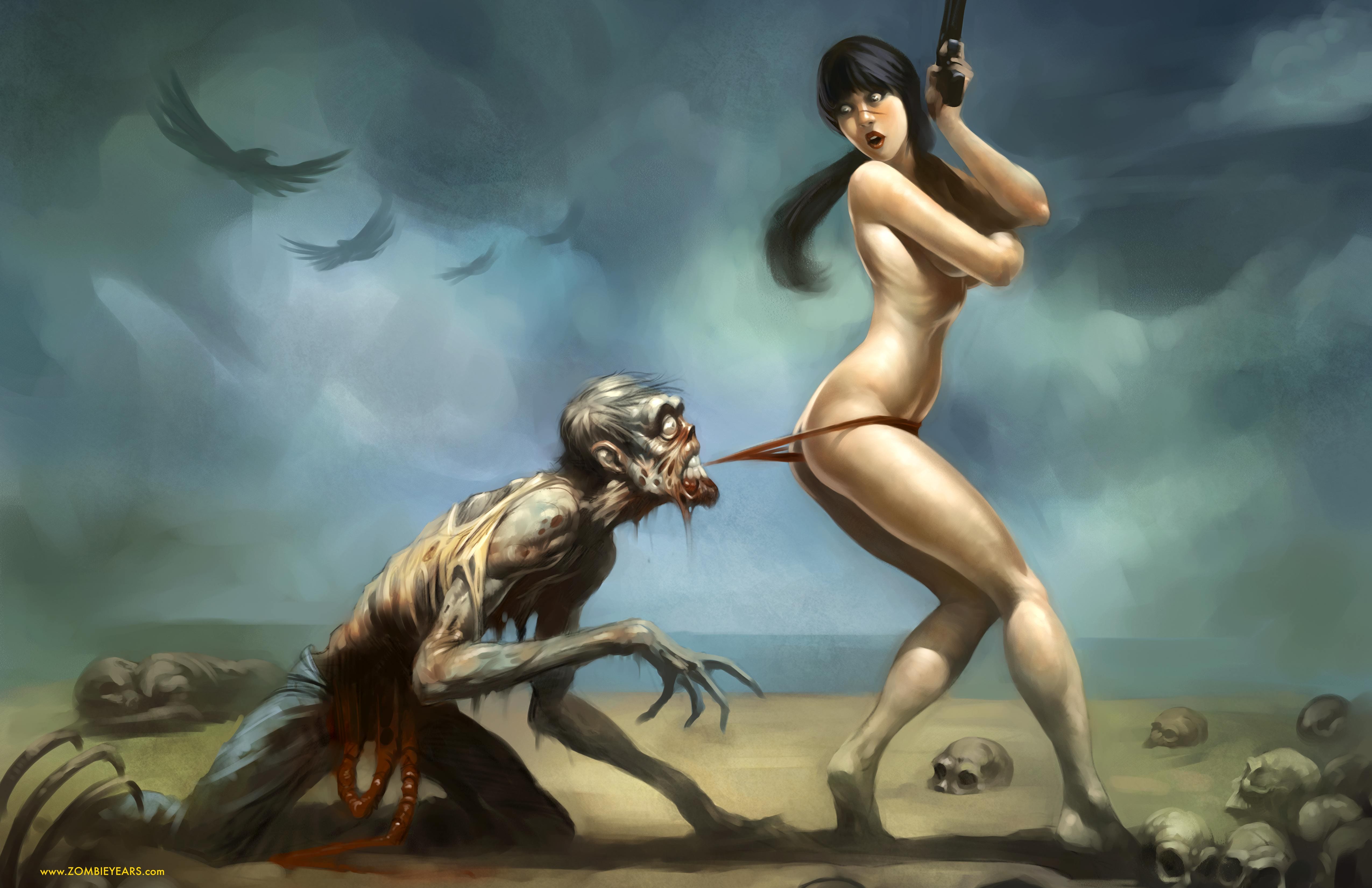
Maybe—but consider what has appeared since The Walking Dead premiered in 2010:
Z Nation, iZombie, Fear the Walking Dead, Ash vs Evil Dead, Train to Busan, World War Z, Warm Bodies, The Girl with All the Gifts, Kingdom, Black Summer, Santa Clarita Diet, One Cut of the Dead, Cargo, Blood Quantum, The Dead Don’t Die, Zombieland: Double Tap, #Alive, Army of the Dead, All of Us Are Dead, The Last of Us, Zom 100, 28 Years Later—and literally hundreds more.
Depending on how broadly you define “zombie-related,” more than 250 zombie and zombie-adjacent movies and television series have appeared since 2010.
That sounds like evidence that the genre has been beaten to death.
I think it proves the opposite.
We haven’t reached the end of the zombie genre. We may not have even reached the tip of the undead iceberg.
ZOMBIES AREN’T THE STORY
Zombies are a framework.
They are the storm, the war, the plague, the collapsing building around the characters. The real story is what people do after the world that made sense to them stops making sense.
George Romero used zombies to talk about racism, consumerism, militarism, class, and the ways human beings eagerly construct their own destruction. Other creators have used them for comedy, romance, family drama, political satire, religious horror, and stories about grief.
A genre doesn’t become useless because it becomes popular. Westerns didn’t become useless because thousands of them were made. Neither did superheroes, crime stories, fantasy, or science fiction.
These things ebb and flow. The market—and our eyeballs—can only handle so much at once. But exhaustion with a genre isn't the same as exhausting its possibilities.
The real question isn’t, “Do we need another zombie story?”
It is, “What does this zombie story have to say?”
That is the question sitting at the heart of my own series, ZOMBIE YEARS.
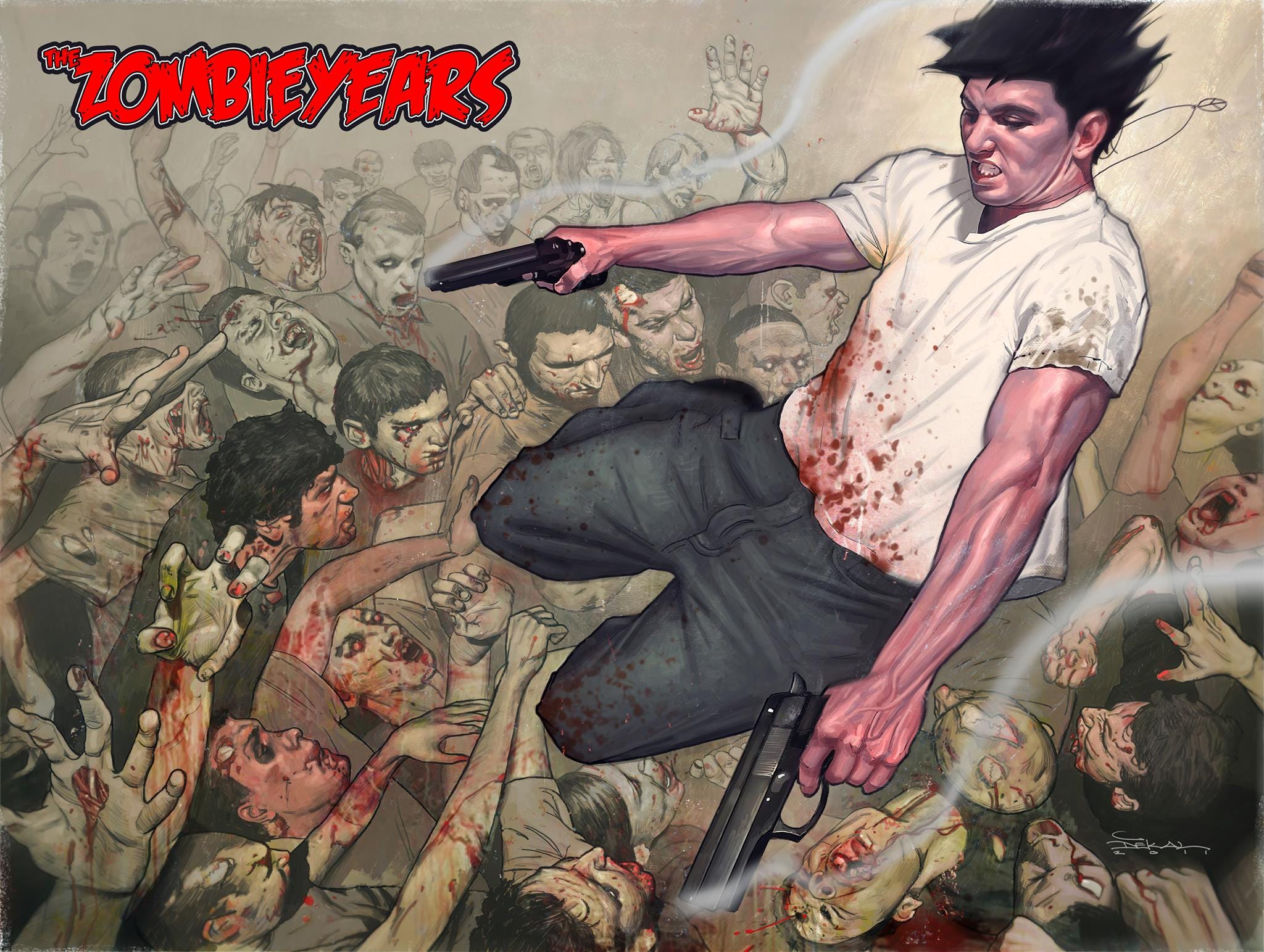
THE END OF THE WORLD—MIAMI STYLE
Zombie Years was never intended to be just another story about people shooting corpses in the head.
It is a post-apocalyptic story rooted in Miami: hot, loud, overcrowded, multicultural, beautiful, ridiculous, and tragic. It follows Frank Núñez and the people around him as they attempt to survive not only the dead, but the collapse of their neighborhoods, relationships, identities, and faith in one another.
The gore is there. The guns, desperate escapes, abandoned streets, and ruined buildings are all there.
But underneath them are stories about family, community, loneliness, memory, faith, and what parts of our humanity survive when almost everything else has been stripped away.
Miami is not simply scenery pasted behind a familiar zombie story. Its Cuban and Latin culture, Haitian and Jewish culture, its voices, its heat, its humor, its neighborhoods, and its contradictions are part of the story’s bloodstream.
That is where a genre stays alive.
Not by inventing a zombie with an extra set of teeth or finding a slightly faster way for it to run, but by allowing different people, cultures, and places to face the end of the world in their own way.
“THANKS GRANDPA”
Some years ago, while working with Creature Entertainment, we decided to carry Zombie Years beyond the comic page.
We produced a short film called “Thanks Grandpa,” based on the comic, as part of an anthology of work we wanted people to experience.
Calling it an “independent production” almost makes it sound too organized.
We filmed it inside my family’s paint and body shop and used whatever locations, materials, people, favors, practical effects, and questionable ideas we could pull together. It was filmmaking in the truest “rebel without a crew” sense.
It was exhausting, messy, absurd, and an experiment-and-a-half. I am still amazed we pulled off as much as we did.
I miss the fun of grabbing a camera and going out to make a movie with people who believe in the same weird idea you do. At the same time, my asshole aches whenever I remember everything it took to finish the damn thing.
Both things can be true.
That experience was also part of what Zombie Years has always been: a comic, a webcomic, a print project, a film experiment, a visual world, and an excuse to see how far a small group of determined lunatics can carry an idea.
“Thanks Grandpa” Credits
Karla Solarte as Del
Chuchi as the adorable—and apparently tasty—puppy. Rest in peace.
Richard Haylor as Grandpa
Norbert Velez as the Zombie
Director of Photography: Anthony Dones
Directed by Julio Alvarez and Juan Navarro
Special Effects: Rene and Al Quesada
Written by Juan Navarro and John Ulloa
Based on the comic series Zombie Years by Juan Navarro
Originally published by Creature Entertainment, LLC
THE DEAD ARE COMING BACK
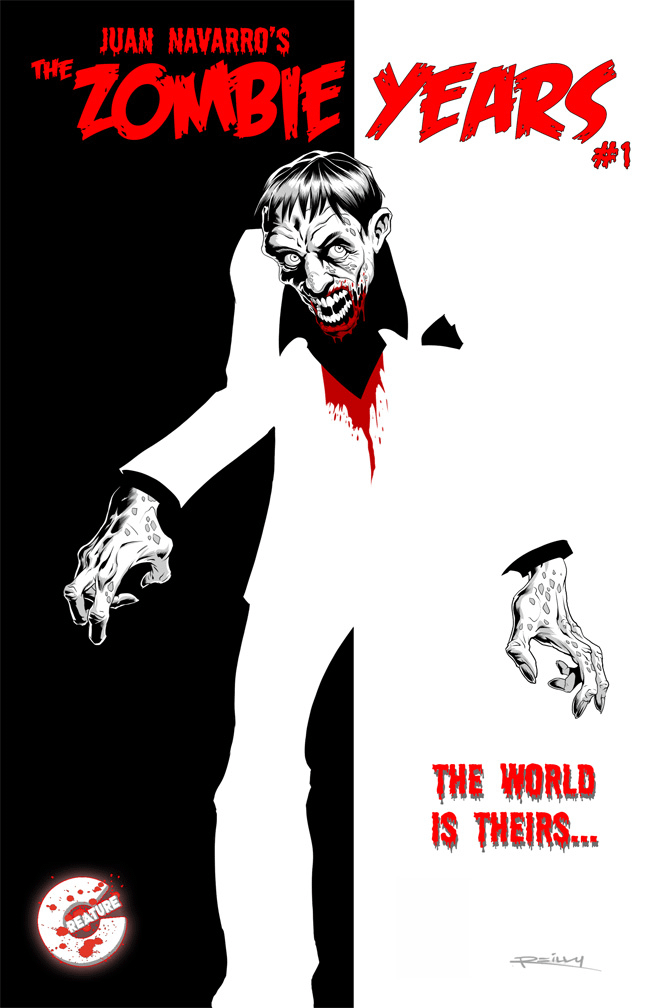
Zombie Years has never completely stayed buried.
It has existed as a webcomic, in print, in digital editions, through Creature Entertainment, and now within the larger FWACATA universe. It recently crawled back into the light with “Apocalypse Knight,” a new short set in the same world, featuring a battered knight trying to bring some kind of order back to undead Miami.
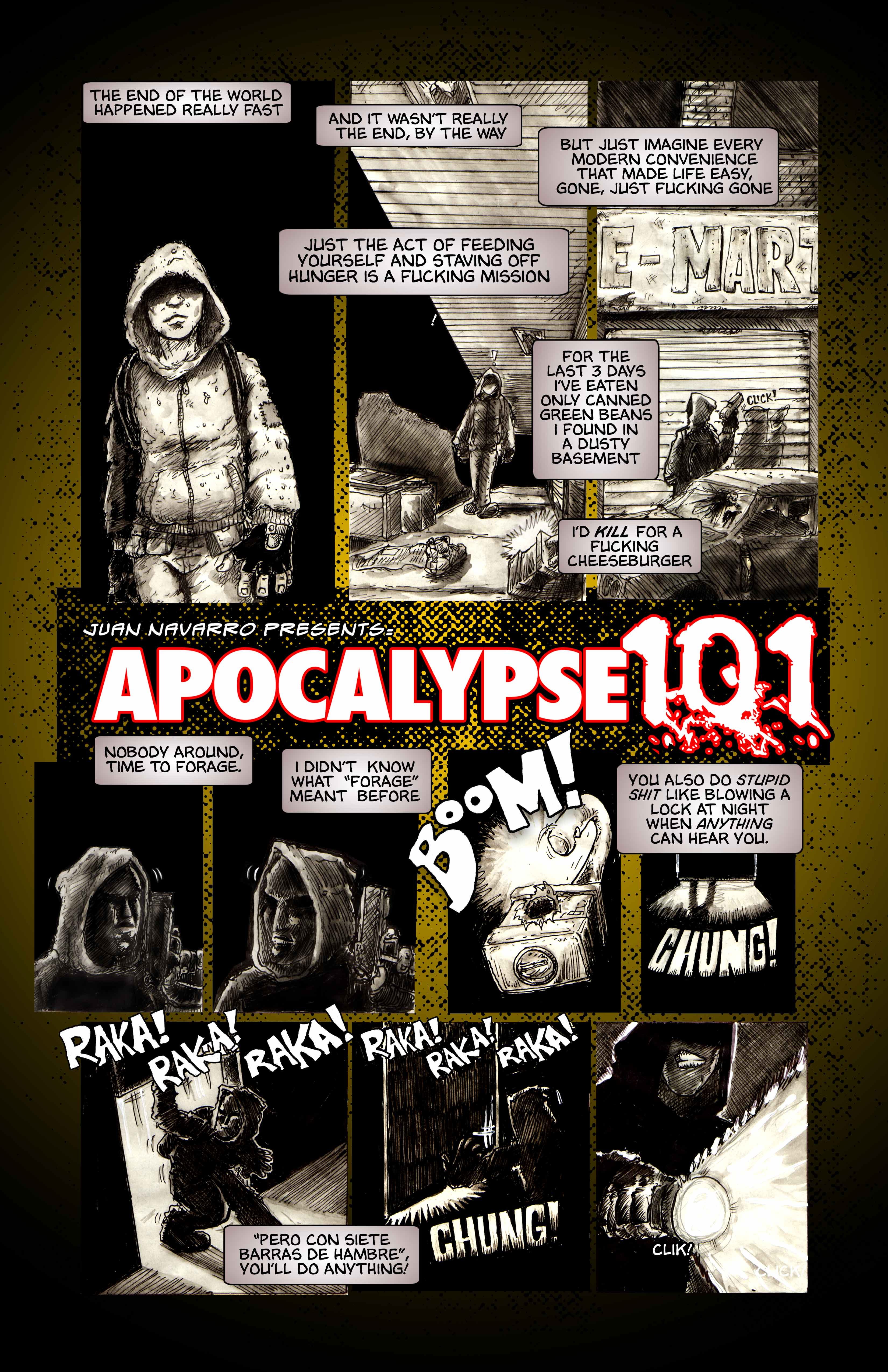
Now I’m returning to the original material to revise, redesign, and rebuild it for a new updated edition planned for 2027.
This isn’t about pretending the past never happened. The roughness, ambition, mistakes, and DIY energy are part of its bones. The goal is to take what worked, repair what didn’t, and present the story with everything I have learned since I first created it.
So, do we need another zombie comic?
Probably not.
But stories have never existed because somebody decided we had reached the correct number of them.
The zombie genre isn’t dead because too many zombie stories exist. It dies only when creators stop bringing anything of themselves to it.
Miami still has stories to tell.
Frank Núñez still has miles to travel.
And Zombie Years is getting back up.